Introduction: Why Security Failures Rarely Come Without Warning
Most security incidents are not sudden or unpredictable. In hindsight, they are often preceded by missed signals, overlooked vulnerabilities, and untested assumptions.
Organizations frequently invest in cameras, access control systems, and written policies — yet still experience critical incidents. The issue is rarely a lack of tools. It is a lack of visibility, integration, and preparedness.
A facility security assessment exists to close that gap.
Rather than reacting after an incident occurs, a proper assessment allows organizations to identify risk early, understand how threats could realistically unfold, and correct weaknesses before they escalate into crises.
Industry best practices for facility security assessments are closely aligned with frameworks and standards published by ASIS International, the global authority on security management.
What Is a Facility Security Assessment?
A facility security assessment is a structured, professional evaluation of how exposed a location is to security threats, safety failures, and crisis-level events.
Unlike basic audits or compliance checklists, a true assessment examines how systems, people, and processes interact under stress.
It evaluates:
- Physical infrastructure
- Operational procedures
- Human behavior and decision-making
- Emergency response capability
The goal is not to create fear — it is to create clarity.
Why Facility Security Is More Complex Than It Appears
Many organizations assume that security is primarily a technical problem. In reality, security failures often occur at the intersection of people and systems.
Common misconceptions include:
- “We have cameras everywhere.”
- “Our employees know what to do.”
- “Security will handle it.”
In actual incidents, these assumptions frequently break down.
A facility security assessment challenges these assumptions by asking:
- What happens when systems fail?
- How do people behave under pressure?
- Who makes decisions when roles overlap?
The Three Pillars of a Facility Security Assessment
1. Physical Security Evaluation
This is the most visible layer and includes:
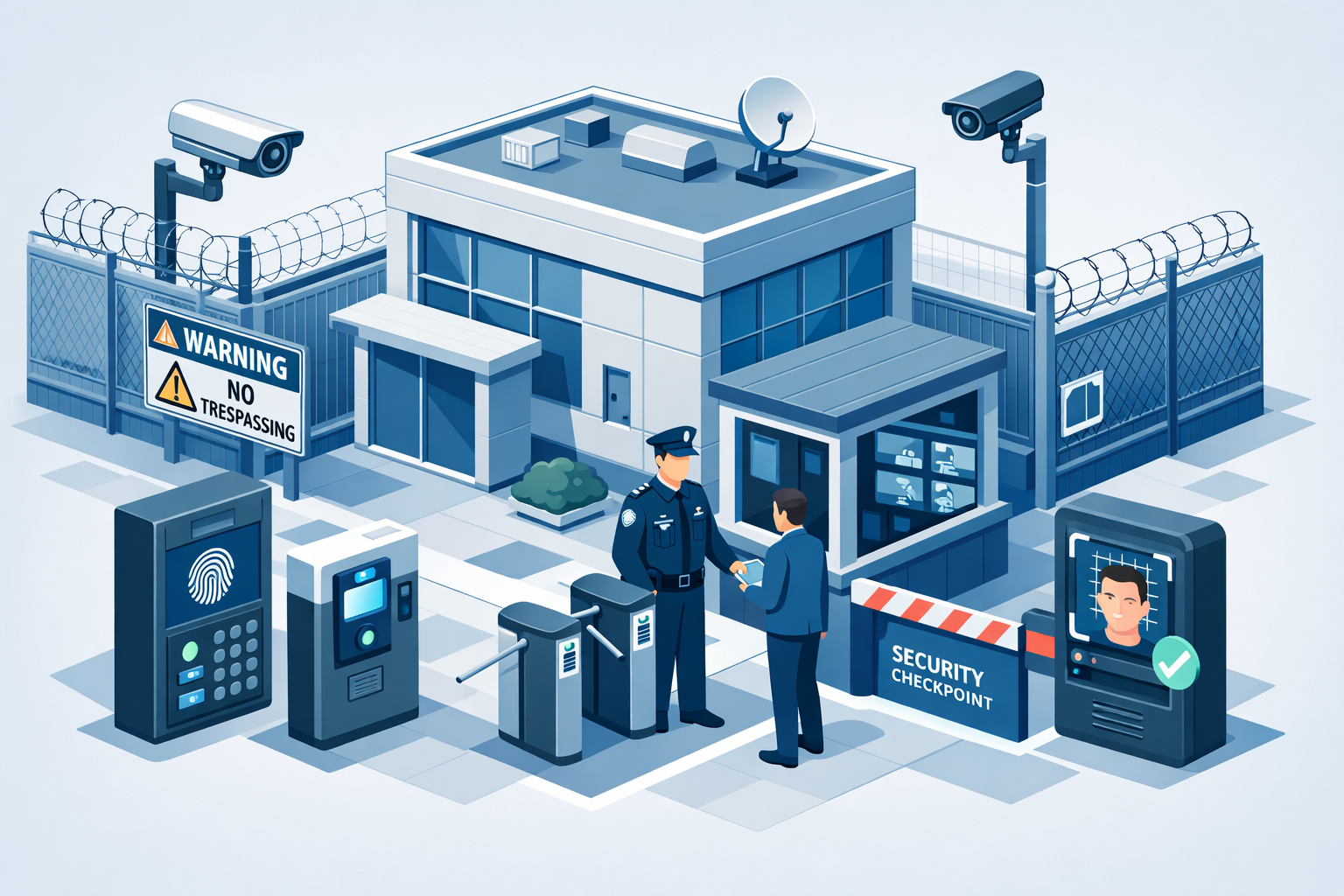
- Entry and exit control
- Visitor management
- Perimeter security
- Lighting and visibility
- Lockdown and safe-area capabilities
However, physical security is not assessed in isolation. The question is not just what exists, but how effectively it is used.
Example:
A secured door is meaningless if employees routinely prop it open.
2. Operational and Procedural Readiness
Policies and plans only matter if they are:
- Known
- Understood
- Practiced
An assessment reviews:
- Emergency action plans
- Communication protocols
- Incident escalation paths
- Coordination between departments
This layer often reveals gaps between policy and practice.
3. Human Factors and Behavioral Risk
Human behavior is the most unpredictable, and most critical, element of security.
This portion examines:
- Situational awareness levels
- Reporting culture
- Training effectiveness
- Decision-making authority
This is where situational awareness becomes essential. Employees are often the first to notice anomalies — but without clarity and confidence, those observations go unused.
The Role of Situational Awareness in Facility Security
Technology detects events.
People detect intent.
Situational awareness allows individuals to:
- Recognize unusual behavior
- Identify deviations from normal patterns
- Notice early warning indicators
A facility security assessment evaluates whether awareness exists in practice, not just in theory.
Organizations that integrate situational awareness into their security posture consistently detect risks earlier, when intervention is still possible.
Identifying Threats vs. Identifying Vulnerabilities
Threats are external.
Vulnerabilities are internal.
A facility security assessment focuses on vulnerabilities because:
- Threats are unpredictable
- Vulnerabilities are controllable
By reducing vulnerabilities, organizations lower the likelihood that any given threat can succeed.
How Security Gaps Escalate Into Crises
Crises rarely begin at full scale. They escalate through:
- Missed indicators
- Delayed response
- Confused authority
- Fragmented communication
Assessments map how an incident could realistically evolve — and where intervention points exist.
This process often reveals that response failure, not threat severity, causes the most damage.
Liability, Reputation, and Organizational Impact
Beyond physical harm, security failures expose organizations to:
- Legal liability
- Regulatory scrutiny
- Reputational damage
- Loss of trust
A documented facility security assessment demonstrates due diligence, which is increasingly important in legal and insurance contexts.
What Happens After the Assessment?
A high-quality assessment produces:
- Prioritized findings
- Clear mitigation recommendations
- Practical next steps
However, identification alone is not enough.
Many organizations engage a crisis consulting group to:
- Align leadership roles
- Integrate findings into crisis plans
- Conduct tabletop exercises
- Train decision-makers
This transforms assessment data into operational readiness.
Facility Security Assessments Are Not One-Time Events
Risk environments evolve.
Assessments should be updated when:
- Facilities expand or renovate
- Staffing models change
- Threat landscapes shift
- Incidents occur
Security is not static — readiness must evolve.
Who Benefits From a Facility Security Assessment?
Facility security assessments are essential for:
- Corporate offices and campuses
- Healthcare facilities
- Educational institutions
- Manufacturing and industrial sites
- Government and public venues
Organizations with limited internal security resources often benefit the most.